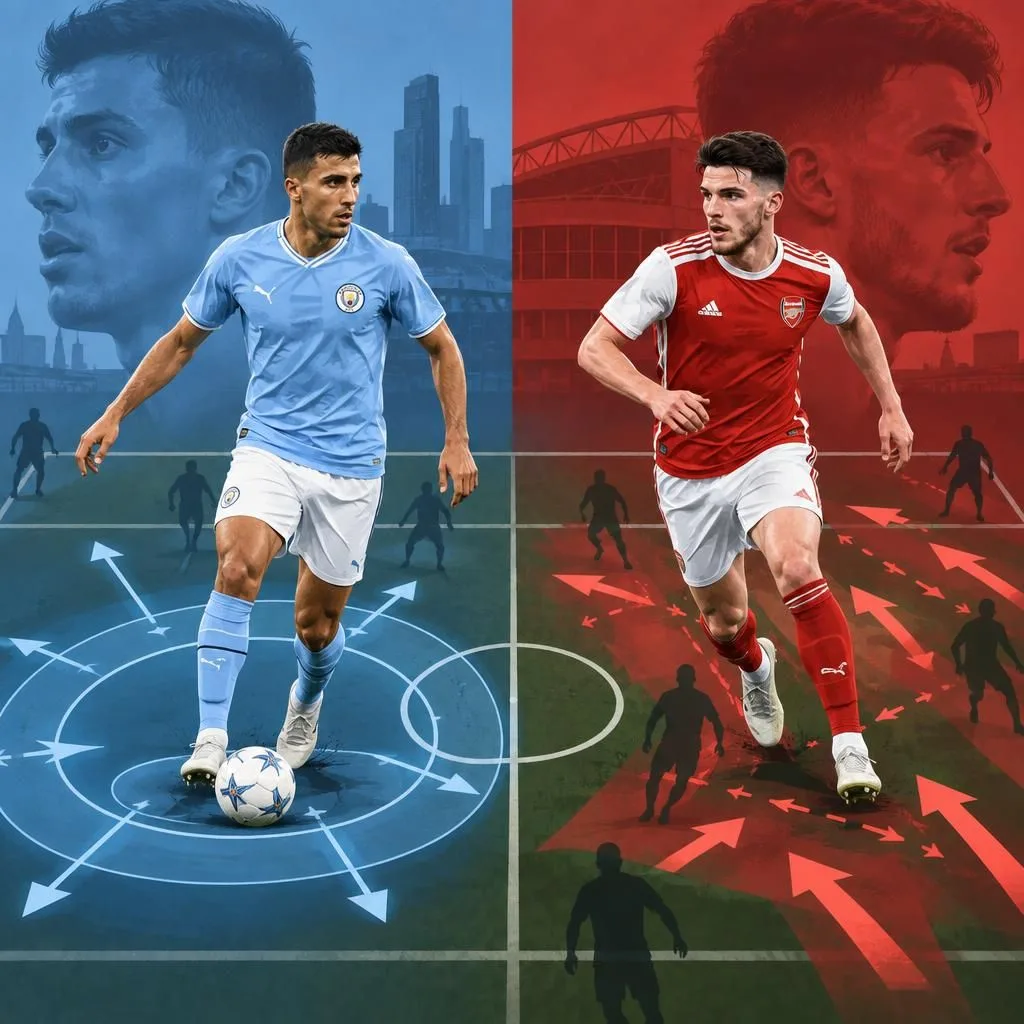
Projecting squad strength into the 2026/2027 season requires looking past immediate form and examining the structural foundations clubs have laid: contract timelines, player age curves, wage sustainability, and tactical identity. In both North London and Catalonia, multi-year rebuilds have evolved into championship-caliber cores. Yet Arsenal and FC Barcelona have arrived at this juncture through fundamentally different avenues.
Defensive Structure: Arsenal's Solidity vs. Barcelona's High-Line Mobility
Arsenal's biggest competitive advantage over recent years has been an elite, physically imposing defensive spine. Entering the 2026/27 period, core center-backs William Saliba and Gabriel Magalhães sit squarely in their athletic primes (mid-to-late twenties). Complemented by versatile hybrid full-backs and elite aerial metrics, Mikel Arteta's side boasts one of the most stable defensive baselines in elite European football.
Barcelona's defensive model under Hansi Flick emphasizes aggressive offside traps and rapid ball progression rather than brute physical deterrence. Anchored by the composure and passing range of Pau Cubarsí alongside experienced partners like Ronald Araújo or Jules Koundé, Barcelona possesses exceptional line-breaking passing from the back. However, maintaining such an aggressive high block requires extraordinary synchronization and leaves little margin for error against quick transition teams.
Midfield Engines: Control, Physicality, and Technical Genius
In midfield, the two clubs present a compelling stylistic contrast:
Arsenal's engine room: Built around Declan Rice's defensive covering and Martin Ødegaard's inventive pressing from the front, Arsenal favors duel-winning power, set-piece dominance, and systematic territory pinning.
Barcelona's creative core: Anchored by Pedri, Gavi, and supporting talents like Fermín López or Marc Casadó, the Catalan side relies on rapid one-touch combinations, half-space mobility, and relentless counter-pressing in opposing territory.
While Barcelona generally holds the edge in improvisational ball retention and close-quarters creativity, Arsenal often dominates matches through sustained physical tempo and set-piece efficiency.
Attacking Profiles and the Number Nine Question
On the flanks, both teams deploy world-class match-winners. Bukayo Saka represents the standard of consistency and decision-making on Arsenal's right wing. On Barcelona's flank, Lamine Yamal represents an exceptional generational talent whose 1v1 threat and playmaking will still be in an upward development curve in 2026.
The greatest point of uncertainty for both squads lies at center-forward:
Barcelona's transition: With veteran goalscorer Robert Lewandowski in the late stage of his career, Barcelona faces the challenge of identifying a reliable primary goalscorer capable of matching high-volume output in European knockout rounds.
Arsenal's clinical edge: Arsenal has prioritized collective scoring across their wingers and midfielders, but question marks linger over whether they need a ruthless, out-and-out penalty box finisher to secure the biggest continental trophies.
Financial Health, Bench Depth, and Future Trajectory
Off the pitch, structural economic differences play a quiet but decisive role in squad depth. Arsenal benefits from Premier League broadcast revenues and a disciplined wage bill, giving them the flexibility to invest in premium depth across all positions without compromising financial regulatory thresholds.
Barcelona, on the other hand, relies heavily on La Masia's continuous talent pipeline to supplement key positions while navigating strict La Liga spending caps. The return to a fully modernized Spotify Camp Nou significantly restores matchday revenues, but their margin for high-cost transfer mistakes remains tighter than Arsenal's.
The Verdict: Floor vs. Ceiling
Looking ahead to 2026/27, Arsenal offers the higher structural baseline: an imposing defense, mature tactical automatisms, and settled peak-age leaders across the pitch. Barcelona offers perhaps the higher individual ceiling, propelled by generational academy talents who can decide high-stakes European ties in a single touch. Any head-to-head clash between the two would pit Arsenal's suffocating territorial discipline against Barcelona's dynamic technical flair.